Nylon, a staple in our daily lives—from clothing to industrial applications—derives from fossil fuels via complex, energy-intensive chemical processes that threaten the environment at every stage. Its production involves extracting hydrocarbons from oil and natural gas, followed by intricate synthesis and fiber spinning, all fueled by non-renewable resources. But the true cost extends beyond manufacturing: nylon’s resilience means it persists in landfills for decades, shedding microplastics that infiltrate oceans and the food chain, harming marine life and potentially impacting human health. Its reliance on fossil fuels exacerbates environmental degradation, from habitat destruction to greenhouse gas emissions. As demand surges, so does ecological damage, pressing us to reconsider our dependence on this synthetic fiber. Could sustainable alternatives and recycling revolutionize nylon’s future, or are we destined to pay an even higher ecological price for convenience?

Nylon: Ubiquitous but Environmentally Costly
Nylon is a material that’s become hard to avoid in daily life. From the clothes we wear and the carpets under our feet to the industrial gear used in manufacturing, nylon’s presence is everywhere. Its popularity stems from its durability, elasticity, and affordability, which have made it a go-to choice for both producers and consumers since its invention in the 1930s. Designed to mimic natural fibers while offering superior strength and easier maintenance, nylon quickly ingrained itself into our routines, so much so that imagining a world without it feels almost impossible.
Yet, behind this practicality lies a web of environmental concerns. Nylon’s roots are deeply tied to fossil fuels—primarily oil and natural gas—used as raw materials in its production. The process of transforming these finite resources into a versatile synthetic fiber is highly energy-intensive, involving complex chemical reactions that require significant amounts of power. This dependence on fossil fuels links nylon’s environmental footprint directly to the extraction and processing industries, which are known for their ecological damage.
The manufacturing process begins with refining crude oil or natural gas to extract hydrocarbons like benzene, toluene, and cyclohexanone. These chemicals serve as building blocks for nylon monomers such as caprolactam for nylon 6 and hexamethylenediamine and adipic acid for nylon 6,6. Producing these monomers involves multiple chemical steps, often conducted under high temperature and pressure, with catalysts that demand a lot of energy. Each stage—extraction, chemical synthesis, and polymerization—relies heavily on fossil fuels, making nylon’s origin fundamentally linked to the oil and gas industries.
Once the monomers are created, they are polymerized into fibers through processes like condensation polymerization. This involves linking molecules into long chains, often releasing small byproducts like water. Achieving this efficiently requires sustained high heat and catalysts, which further increase energy consumption and environmental impact. The polymerization step is resource-intensive, and the resulting nylon fibers are then extruded through tiny nozzles to form continuous filaments—another energy-demanding process that adds to nylon’s ecological footprint.
The environmental toll of nylon doesn’t end with its production. Because it’s a type of plastic that doesn’t biodegrade easily, discarded nylon products can persist in landfills for decades. When washed or worn, tiny fibers—microplastics—shed from clothing and other items, entering waterways and oceans. These microfibers are mistaken for food by marine animals, causing internal injuries and disrupting ecosystems. Over time, the build-up of microplastics in the environment and in our food chain raises serious concerns about their long-term health effects on wildlife and humans alike.
Furthermore, nylon’s reliance on fossil fuels amplifies the environmental challenges associated with its lifecycle. Extracting, refining, and processing oil and natural gas are activities fraught with ecological harm, from habitat destruction and oil spills to air pollution and greenhouse gas emissions. The chemical runoff from manufacturing plants contaminates water sources, affecting both ecosystems and nearby communities. As demand for nylon continues to grow, so does the strain on finite resources and the contribution to climate change, underscoring the urgent need for sustainable alternatives and responsible consumption.
From Crude to Fiber: The Complex Journey of Nylon Production
Nylon production begins with the refining of crude oil or natural gas to extract the basic hydrocarbons needed for chemical synthesis. These raw materials—such as benzene, toluene, and cyclohexanone—are the foundational building blocks for creating nylon monomers. Transforming these simple molecules into more complex chemicals is a highly energy-intensive process that relies heavily on fossil fuels, directly tying nylon’s origins to the broader oil and gas industries. The extraction and processing of these hydrocarbons involve a series of complex steps, each demanding substantial energy input and specialized equipment.
Once extracted, these hydrocarbons undergo further processing in petrochemical plants to produce key chemicals like benzene, toluene, and cyclohexanone. From there, they serve as feedstocks to synthesize the monomers that form nylon, including caprolactam for nylon 6 and hexamethylenediamine and adipic acid for nylon 6,6. Producing caprolactam involves a reaction between cyclohexanone and ammonia, often in the presence of catalysts, under carefully controlled conditions of temperature and pressure. This step showcases the technical complexity and energy demands inherent in nylon’s chemical manufacturing.
The production of nylon 6,6 requires two distinct chemical pathways—one for hexamethylenediamine and another for adipic acid—that are then combined through a process called condensation polymerization. During this process, molecules link together, releasing small byproducts like water. Achieving efficient polymerization demands sustained high heat and the use of catalysts, which significantly increase energy consumption. The resulting long chains of nylon polymers are then prepared for fiber formation, a process that involves dissolving and extruding the polymer through tiny nozzles to create continuous filaments.
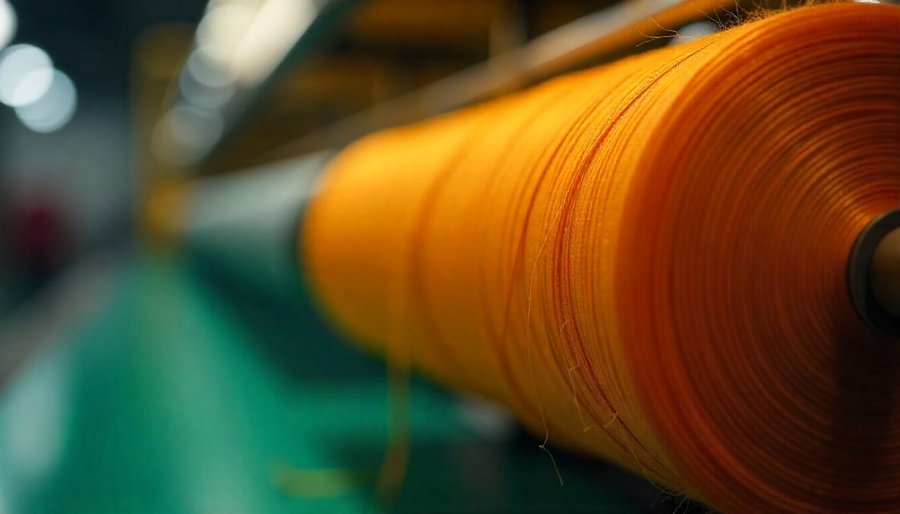
This fiber-spinning step involves dissolving the nylon polymers in specific solvents and pushing them through fine nozzles to produce threads. These filaments are then cooled, stretched, and treated to enhance strength, elasticity, and durability. Each phase of this process consumes additional energy and resources, illustrating the resource-intensive nature of turning chemical monomers into usable fibers. The entire chain—from raw material extraction to fiber formation—is rooted in a complex, energy-demanding industrial operation powered predominantly by fossil fuels.
From start to finish, nylon’s manufacturing process underscores its deep dependence on the oil and gas sector. The energy used in chemical reactions, the high-temperature steps, and the resource-heavy fiber production all contribute to a significant environmental footprint. This reliance results in greenhouse gas emissions, pollution, and resource depletion that ripple throughout the lifecycle of nylon. Recognizing these processes highlights the urgent need for innovations in sustainable production methods and alternative materials that can lessen nylon’s ecological impact while maintaining its utility.
Environmental Toll: Pollution and Resource Depletion from Nylon’s Lifecycle
The environmental impact of nylon stretches far beyond its manufacturing process, casting a long shadow over ecosystems and communities worldwide. As a synthetic fiber that doesn’t biodegrade, nylon persists in landfills for decades, slowly breaking down into microplastics that contaminate soil and water. These tiny fibers are shed during washing and wear, and once they enter waterways, they pose a serious threat to marine life. Fish, mollusks, and other aquatic creatures often mistake microplastics for food, ingesting them and suffering internal injuries, reproductive issues, or even death. This accumulation doesn’t stay confined to the ocean; it moves up the food chain, eventually reaching humans through seafood consumption, raising concerns about long-term health effects.
Washing nylon garments is a surprisingly significant source of microplastic pollution. Every cycle in the laundry releases countless tiny fibers that escape filtration systems at wastewater treatment plants, which are often ill-equipped to catch these microscopic particles. Over time, these fibers spread across oceans and rivers, infiltrating ecosystems and threatening biodiversity. Marine animals ingest the fibers, leading to internal injuries and reproductive problems, while the fibers themselves can carry toxic chemicals absorbed from the environment. The pervasive presence of microplastics in our waters and food supplies underscores the silent but serious toll nylon pollution exacts on the planet and its inhabitants.
The reliance of nylon production on fossil fuels compounds these environmental challenges. Extracting, refining, and processing oil and natural gas are inherently destructive activities, often resulting in habitat loss, oil spills, and water contamination. Chemical plants involved in nylon synthesis emit pollutants that contribute to smog, acid rain, and climate change, while greenhouse gases released during manufacturing significantly add to global warming. As demand for nylon continues to rise, so does the pressure on finite resources, fueling a cycle of extraction and pollution that becomes increasingly difficult to break. This dependency not only accelerates resource depletion but also prolongs the environmental damage associated with fossil fuel extraction and processing.
Beyond pollution, the extraction and processing of oil and gas devastate local environments. Oil spills stain coastlines and poison marine ecosystems, while drilling operations carve up landscapes, displace wildlife, and threaten groundwater supplies. Chemical runoff from factories can seep into soils and water sources, contaminating drinking water and harming local communities. Many of these chemicals are persistent, lingering in the environment and accumulating in the food web. Over time, the health of ecosystems and human populations near production sites deteriorates, often with long-lasting consequences that are hard to reverse. The environmental costs of nylon’s raw materials highlight the urgent need for cleaner, more sustainable approaches.
Addressing these issues requires a fundamental rethink of how we produce and consume nylon. Recycling existing fibers and developing bio-based alternatives from renewable resources offer promising paths forward, but scaling these solutions remains a challenge. Consumer awareness and industry shifts toward circular economies—where materials are reused and recycled—are crucial to reducing nylon’s environmental footprint. Supporting natural fibers and choosing products made from recycled nylon can help mitigate some of the damage, but meaningful change also depends on technological innovation and stricter regulations. Recognizing the broad and interconnected impacts of nylon production underscores the importance of transitioning toward sustainable materials that protect ecosystems, conserve resources, and ensure a healthier planet for future generations.